Author: admin

  • How to start learning structural engineering and design

    To start learning structural engineering and design, you must build a foundation in mathematics and physics before advancing to specialized structural analysis and material-specific design. Because structural engineering is a regulated profession, formal education is usually required for a career, but self-study is a viable way to gain introductory knowledge. 

    1. Build Foundation (Prerequisites)

    Before tackling structural topics, you must be proficient in the following:

    • Mathematics: Calculus (I, II, and III) and Linear Algebra are essential for understanding force vectors and structural mechanics.
    • Physics: Mastery of Newtonian physics, specifically Statics (the study of forces on non-moving objects), is the bedrock of the field.
    • Core Concepts: Learn about “Load Paths”—how a force (like gravity or wind) travels from a roof, through beams and columns, into the foundation and the ground. 

    2. Learn Structural Theory

    Once you understand the basics, move to the core academic subjects:

    • Mechanics of Materials: Study how materials (like steel and concrete) deform under stress and strain.
    • Structural Analysis: Learn how to calculate internal forces (shear, moment, axial) in trusses, beams, and frames.
    • Introductory Books: Consider reading Structures: Or Why Things Don’t Fall Down by J.E. Gordon for a conceptual introduction, or textbooks like Structural Analysis by R.C. Hibbeler for technical depth. 

    3. Master Software and Drafting

    Modern design is heavily reliant on digital tools: 

    • Drafting (CAD/BIM): Learn AutoCAD for 2D drafting and Revit for 3D Building Information Modeling (BIM).
    • Analysis Software: Gain familiarity with industry-standard analysis tools like SAP2000STAAD.Pro, or ETABS

    4. Enroll in Professional Training 

    If you are pursuing a career, follow these academic and professional milestones:

    • Degree: Earn a Bachelor’s degree in Civil Engineering or Structural Engineering from an accredited institution.
    • Online Courses: Use platforms like Coursera or edX to find specialized certificates in seismic design or concrete fundamentals.
    • Professional Organizations: Join groups like the Institution of Structural Engineers (IStructE) or the American Society of Civil Engineers (ASCE) for networking and technical seminars. 

    5. Obtain Licensure (For Careers) 


    To practice professionally and sign off on designs, you must typically:

    • Pass the Fundamentals of Engineering (FE) exam shortly after graduation.
    • Gain approximately 4 years of supervised work experience.
    • Pass the Professional Engineering (PE) exam (and specifically the SE exam in some regions) to become a licensed Professional Engineer. 

    PEDC

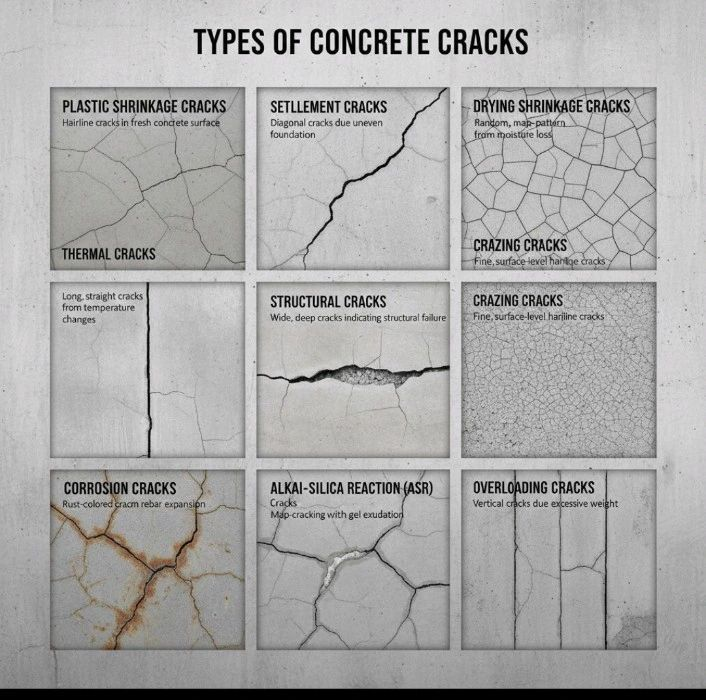
  • Different types of Cracks in Concrete

    Different types of Cracks in Concrete.


    1. Plastic Shrinkage Cracks Hairline cracks in fresh concrete surface due to rapid drying.

    2. Settlement Cracks – Diagonal cracks caused by uneven foundation settlement.

    3. Drying Shrinkage Cracks – Random, map-like cracks due to loss of moisture.

    4. Thermal Cracks – Long, straight cracks from temperature changes.

    5. Structural Cracks Wide and deep cracks indicating structural failure.

    6. Crazing Cracks Fine, surface-level hairline cracks (looks like a network).

    7. Corrosion Cracks Rust-colored cracks caused by expansion of corroded rebar (steel inside concrete).

    8. Alkali-Silica Reaction (ASR) Cracks – Map-pattern cracks with white gel due to chemical reaction inside concrete.

    9. Overloading Cracks – Vertical cracks formed due to excessive load or weight.

  • Development, Repair & Retrofitting Solutions for GOLF Course

    Golf Course Engineering Consultancy

    Development, Repair & Retrofitting Solutions

    Golf courses are specialized civil and landscape infrastructures requiring precise engineering, sustainable design, and long-term performance planning. Our engineering consultancy provides end-to-end solutions for golf course development, repair, and retrofitting, combining technical expertise with environmental responsibility and international best practices.


    Our Golf Course Engineering Services

    Golf Course Development

    We provide comprehensive engineering services for new golf course projects, from concept to commissioning.

    Our services include:

    • Site feasibility study and land assessment
    • Topographic survey and contour planning
    • Master planning and course layout engineering
    • Earthwork, grading, and shaping design
    • Surface and subsurface drainage systems
    • Automated irrigation system design
    • Cart paths, bridges, and service infrastructure
    • Turfgrass selection and establishment planning

    Our approach ensures optimal playability, efficient drainage, and long-term durability.


    Golf Course Repair & Rehabilitation

    Existing golf courses often suffer from drainage failure, turf degradation, and aging infrastructure. We specialize in restoring performance while minimizing disruption to operations.

    Key rehabilitation services:

    • Condition assessment of greens, fairways, and bunkers
    • Drainage failure diagnosis and corrective design
    • Re-grading and surface leveling
    • Bunker repair and erosion control
    • Turf restoration and soil improvement
    • Irrigation system repair and optimization

    Golf Course Retrofitting & Modernization

    We upgrade aging golf courses to meet modern standards of sustainability, efficiency, and climate resilience.

    Retrofitting solutions include:

    • Flood mitigation and advanced drainage retrofitting
    • Smart irrigation systems and water-saving technologies
    • Climate-resilient and low-maintenance turf replacement
    • Structural strengthening of cart paths and bridges
    • Water harvesting and reuse systems
    • Sustainable landscaping and naturalization

    Our Engineering Approach

    Integrated Planning

    We combine civil engineering, hydraulic design, landscape planning, and turf science into a single coordinated solution.

    Sustainable Design

    Our designs focus on water conservation, reduced maintenance costs, and environmental compliance.

    Lifecycle Performance

    Every solution is evaluated for long-term durability, operational efficiency, and cost-effectiveness.


    Why Choose Our Consultancy?

    • Specialized golf course engineering expertise
    • International design standards and best practices
    • Customized solutions based on site conditions
    • Strong focus on sustainability and resilience
    • Proven experience in complex outdoor infrastructure

    Technical Capabilities

    • Golf course grading and earthwork design
    • Drainage and stormwater management
    • Irrigation system hydraulic modeling
    • Turf root-zone and soil engineering
    • Erosion control and slope stabilization
    • Construction supervision and quality control

    Industries & Clients We Serve

    • Private and resort golf courses
    • Country clubs and sports authorities
    • Real estate and hospitality developers
    • Government and institutional clients

    Project Delivery & Support

    We support our clients through every stage of the project:

    • Feasibility and concept design
    • Detailed engineering and tender documentation
    • Construction supervision and QA/QC
    • Commissioning and post-project support

    Commitment to Sustainability

    Our golf course engineering solutions promote:

    • Efficient water usage
    • Reduced chemical dependency
    • Climate-adaptive infrastructure
    • Preservation of natural ecosystems

    Contact Us

    Looking to develop, rehabilitate, or modernize a golf course?
    Our engineering team is ready to deliver efficient, sustainable, and high-performance golf course solutions.

    📩 Contact us today to discuss your project requirements.


    SEO Keywords Integrated

    Golf course engineering consultancy, golf course development, golf course construction engineering, golf course repair, golf course retrofitting, golf course drainage design, golf course irrigation system, sustainable golf course design.

  • How to Go Through Early Job Life: Practical Advice for Your First Year at Work

    Starting your early job life feels a lot like stepping into a new world. One moment you’re a student, the next you’re expected to understand office culture, deadlines, responsibilities, and professional communication — all at the same time.
    Most people don’t talk about how overwhelming that first year can feel. But if you handle it smartly, it becomes the strongest foundation for your career.

    This guide covers real, tried-and-tested advice for anyone beginning their professional journey and wondering how to survive — and grow — in their early job life.

    1. Accept That the First Few Months Will Feel Messy

    There’s no shortcut here.
    The beginning feels confusing for everyone:

    • You won’t understand everything
    • You might feel slow
    • You’ll hesitate to ask questions
    • You’ll worry about making mistakes

    But this phase doesn’t last. Once you settle in, the same place starts feeling familiar. Accepting the discomfort makes it easier to handle.


    2. Learn Fast and Learn Beyond Your Job Description

    One thing that separates average employees from the promising ones is curiosity.
    Don’t limit yourself to the exact tasks assigned from day one.

    Try to:

    • Observe how experienced colleagues work
    • Take notes
    • Ask thoughtful questions
    • Offer help in small tasks
    • Understand how your department connects to the company

    In early job life, people notice who is willing to learn — and they value it.


    3. Build Work Habits That Will Follow You for Years

    Good habits created in your first job stay with you forever. Some of the best ones are simple:

    • Be on time
    • Stay organized
    • Keep track of deadlines
    • Reply to emails professionally
    • Follow up on tasks without being reminded

    These habits silently build your reputation. In workplaces, consistency speaks louder than talent.


    4. Communicate Clearly — It Prevents 90% of Problems

    Most early job stress comes from unclear communication.
    Instead of assuming, get into the habit of confirming:

    • “Just to be sure, you want this report by today 5 PM?”
    • “Do you prefer it in Excel or PDF?”
    • “Let me repeat the task to confirm I understood correctly.”

    Clear communication makes you look confident and reliable — two qualities managers love.


    5. Stay Humble, But Don’t Stay Invisible

    Many freshers think staying silent makes them look respectful.
    It doesn’t.

    Be humble, but:

    • Participate when needed
    • Share ideas politely
    • Take initiative on small tasks
    • Ask for responsibilities

    Managers appreciate juniors who show interest, not just obedience.


    6. Build Healthy Workplace Relationships

    Your early job life becomes much easier when you have supportive colleagues.
    You don’t need to be friends with everyone, but try to create positive connections.

    Be polite, helpful, and respectful.
    And keep personal drama out of the office — professionalism is your best friend in the long run.


    7. Learn How to Handle Pressure Without Burning Out

    Whether you work in corporate, construction, sales, customer service, or tech — the first year will test your patience.

    Learn to manage stress smartly:

    • Break tasks into smaller steps
    • Keep a daily work list
    • Take 5-minute breaks when needed
    • Avoid comparing yourself with seniors
    • Celebrate your progress

    Career growth is a marathon, not a sprint.


    8. Focus on Skill Growth, Not Just Salary Growth

    One mistake many beginners make is chasing quick money.
    But early job life is not the time to focus only on salary — it’s the time to build skills that will later multiply your income.

    Skills attract opportunities.
    Opportunities bring better earning.
    Strong foundation = long-term success.

    Invest your time in learning, and your future self will thank you.


    9. Keep Upgrading Yourself Outside Office Hours

    The world is moving fast, and so should you.
    Don’t depend only on what the office teaches.

    Try to:

    • Build technical skills
    • Improve communication
    • Learn software used in your industry
    • Take short online courses
    • Read about your field regularly

    A little improvement every week makes a huge difference in a year.


    10. Give Yourself Time — Growth Is Slow, But Certain

    Early job life isn’t about being perfect.
    It’s about building discipline, confidence, and experience.
    Some days will feel tough, some tasks will confuse you, but every week you’ll get a little better.

    Be patient with yourself.
    You’re not supposed to know everything on day one — you’re supposed to learn.


    Final Thoughts

    Your early job life is more than just a first job — it’s a learning ground where you understand the real world, discover your strengths, and build habits that shape your future career.

    If you stay patient, stay curious, and stay disciplined, your first year will set you up for long-term success.

    And remember:
    Everyone you admire today once stood where you are standing now.

  • Malaysia Maps 11 Active Fault Zones — What It Means for Earthquake Risk & Preparedness

    🧭 What’s New: Nationwide Fault Mapping

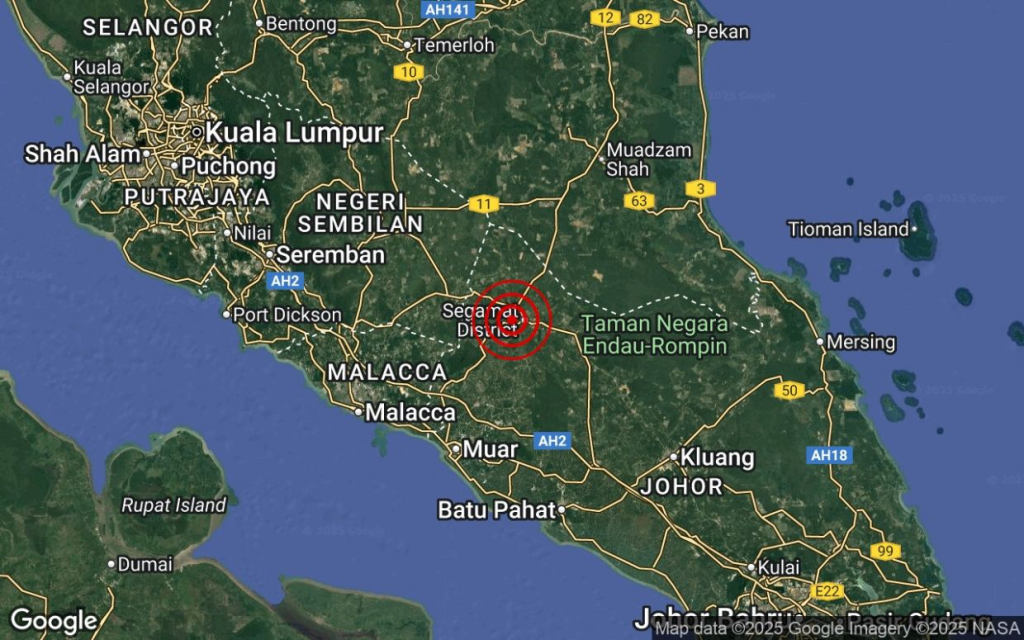
    • The Minerals and Geoscience Department (JMG) of Malaysia has identified and mapped 11 active earthquake fault zones nationwide, according to Johari Abdul Ghani, the country’s Plantation and Commodities Minister.
    • The mapping was carried out between 2016 and 2020.
    • Of those 11, six are in Peninsular Malaysia, and the rest are in East Malaysia (Sabah and Sarawak).

    Peninsular Malaysia — 6 fault zones:

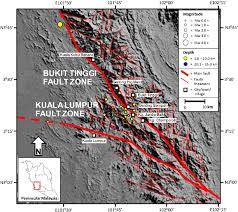
    • Bukit Tinggi Fault (Pahang)
    • Bokbak Fault (Kedah–Perak)
    • Terengganu Fault (Terengganu)
    • Banding Fault (Perak)
    • Kuala Pilah Fault (Negeri Sembilan)
    • Mersing Fault (Johor)

    East Malaysia — Sabah & Sarawak:

    • Tubau Fault (Miri, Sarawak)
    • In Sabah: Lobou Lobou Fault and Mensaban Fault (Ranau), plus Lahad Datu Fault and Tabin Fault (Lahad Datu)


    📡 Monitoring & Preparedness: What Malaysia Is Doing

    • In Sabah alone, six active “fault-movement benchmark” stations have been installed to monitor subtle ground shifts.
    • Across other states (Pahang, Selangor, Perak, Negeri Sembilan, Sarawak and Sabah), 47 passive monitoring stations are already operational, with plans to expand coverage to other high-risk areas including Johor.
    • Regarding early-warning systems: MetMalaysia currently runs about 80 seismographic stations nationwide, supported by 323 international monitoring stations.
    • Malaysia issues earthquake alerts within 8 minutes for quakes of magnitude 3.0 or higher, and under the 13th Malaysia Plan, aims to reduce alert time to 6 minutes by 2026.

    Johari emphasized that seismic hazard maps are given to local authorities and engineers, who are advised to follow the country’s guidelines — the Malaysia National Annex to Eurocode 8 — when designing earthquake-resistant buildings.

    🌍 Why This Matters — Malaysia is Not Immune

    For a long time, many people assumed that countries like Malaysia — far from the so-called “Ring of Fire” — are largely safe from significant earthquakes. That belief may now be shifting.

    • The identification of 11 active fault zones nationwide changes that perception: seismic risk — even if moderate compared to global hotspots — exists in both Peninsular and East Malaysia.
    • Several states already flagged as “earthquake-risk areas” by JMG include Pahang, Terengganu, Perak, Negeri Sembilan, Sabah, and Sarawak.
    • In recent months, government reports also identified 14 earthquake “hotspots” across the country — overlapping with many of these fault zones.

    This mapping and monitoring initiative — combined with hazard-mapping, monitoring stations, and building code recommendations — suggests that Malaysia is transitioning from “low-earthquake awareness” to “earthquake resilience planning.”

    🏗️ What It Means for Engineers, Builders, and Residents

    Because of these developments:

    • New buildings — especially in identified fault zones or hotspots — should comply with seismic-resistant design standards. Following the Malaysia National Annex to Eurocode 8 is now more relevant than ever.
    • Local authorities and urban planners must consult seismic hazard maps during approvals, zoning, and development planning — especially for schools, hospitals, high-rises, and infrastructure.
    • Homeowners, contractors, and engineers should stay updated about changes in hazard-zone designations, monitoring-station expansions, and possible strengthening/retrofitting guidelines.
    • Disaster preparedness (public awareness, early-warning systems, evacuation planning) should become part of national/regional policy, even in regions that were earlier considered “safe.”

    ⚠️ What It Doesn’t Mean — Not All Faults Are About to Trigger Mega-Quakes

    • Mapping a fault zone does not mean an earthquake is imminent. Faults can be “active” but dormant for long periods.
    • According to authorities, earthquakes still cannot be precisely predicted. What’s possible is faster alerting and better structural resilience.
    • For many areas, seismic hazard remains relatively low or moderate. But with population growth, urbanization, and more construction — the risk from damage and collapse increases if codes and standards are ignored.

    💡 What Other Countries (and Bangladesh) Can Learn from Malaysia’s Approach

    Given your background in structural design, codes (BNBC, ACI, ASCE), and experience with earthquake-resilient design — the Malaysian case offers good lessons for Bangladesh too:

    • Systematic fault mapping + hazard mapping before or alongside development.
    • Nationwide seismic monitoring network (active + passive stations) to track micro-tremors and long-term risk.
    • Enforcement of earthquake-resistant design codes (like Eurocode 8, similar to BNBC/ACI) for all new structures — especially in high-risk zones.
    • Public awareness & disaster-preparedness systems, including early-warning and community readiness.

    If Bangladesh adopted a similar multi-pronged approach, it could significantly reduce seismic risk — quite relevant given rising concerns about earthquake vulnerability in Dhaka and other zones.

    ✅ Conclusion: A Wake-Up Call — Not a Panic Button

    The mapping of 11 active fault zones across Malaysia is a wake-up call — a reminder that even places with historically low earthquake activity should stay vigilant.

    It doesn’t mean panic. It means planning, preparation, and responsibility — from government to engineer to everyday citizen.

    Because earthquakes don’t need to be catastrophic to be dangerous — poor design, weak enforcement, and ignorance are enough.

    Malaysia is showing how to move from “we hope nothing happens” to “we are prepared if anything happens.” That’s a shift worth noting — not just for Malaysians, but for everyone in earthquake-prone or potentially vulnerable regions.

  • Recent Earthquake in Bangladesh – LIVE or LEAVE?

    Earthquake in Bangladesh • Dhaka Earthquake • Seismic Risk • BNBC 2020 • Fault Lines


    Recent Earthquake in Bangladesh — Live or Leave?

    On 21 November 2025, Bangladesh woke up to one of the strongest earthquakes in recent years. For 26 seconds, millions felt the ground shake, buildings sway, and fear rise in their chest. Offices came to a standstill, parents grabbed their children, and everyone asked the same question:

    👉 “Are we safe here?”
    👉 “Should we leave Dhaka?”

    This article breaks down the quake, the science, the emotions, and the realistic decisions ordinary people face today.


    🔶 What Exactly Happened on 21 November 2025?

    A Sudden 5.7 Magnitude Quake

    • Time: 10:38 a.m. BST
    • Magnitude: 5.7
    • Epicenter: Madhabdi, Narsingdi (very close to Dhaka)
    • Depth: ~10 km (shallow = stronger shaking)

    This wasn’t a distant tremor.
    It was a Bangladesh-centered, shallow, high-intensity shake.

    Damage & Casualties Reported

    • 5–10 deaths (varies by source)
    • Over 100–600 injuries
    • Structural damage in Dhaka, Gazipur & Narsingdi
    • Cracks in buildings, broken walls, falling objects
    • Panic evacuation from high-rises

    Aftershocks That Triggered More Panic

    Within hours:

    • A 3.3 magnitude tremor
    • A 4.3 magnitude tremor
    • Several micro-aftershocks

    People stayed outside for hours, afraid of returning to their homes.


    🔶 Bangladesh’s Seismic Reality: A Wake-Up Call

    Many experts are saying it outright:

    Bangladesh stands on major active faults, including:

    • Madhupur Fault
    • Dauki Fault
    • Plate boundary near the Himalayas

    BNBC 2020 places Bangladesh in Seismic Zones 2, 3, and 4 — with Dhaka in moderate to high risk.

    The UN recently declared Bangladesh as one of the world’s most vulnerable earthquake zones.

    So the big question becomes…


    ⚠️ Should You LIVE Here… or LEAVE?


    1. This Was NOT a Catastrophic Earthquake

    A magnitude 5.7 will shake buildings but will not level a city.

    It was serious — but survivable.

    2. Preparedness Works (Ask Japan)

    Countries with frequent earthquakes stay safe because:

    • Buildings are designed correctly
    • Codes are enforced
    • People know what to do

    Bangladesh can learn and adapt.

    3. Realistically, People Cannot Just Leave

    You can’t abandon:

    • Jobs
    • Schools
    • Homes
    • Family roots

    Most people will stay.
    So staying safely is the goal — not escaping.


    ❌ Reasons Some Should Consider LEAVING Certain Buildings or Areas

    1. Old Buildings = Real Danger

    If you live in:

    • Old Dhaka
    • Non-engineered buildings
    • Structures older than 25–30 years
    • Buildings without BNBC seismic design

    You are at higher risk.

    2. Unauthorized or Weak High-Rises

    Thousands of buildings were made without:

    • Proper foundation
    • Shear walls
    • Quality concrete
    • Column-beam integrity

    A larger earthquake could be devastating.

    3. Expert Warning of a Potential Larger Quake

    If your area is structurally unsafe, relocating to a safer building (even temporarily) is wise.


    🔶 What YOU Should Do Now (Practical + Life-Saving)

    1. Inspect Your Building

    Ask a structural engineer to check:

    • Cracks
    • Column sizes
    • Beam depths
    • Foundation design
    • BNBC compliance

    2. Create a Family Earthquake Plan

    Agree on:

    • Safe room spots
    • Exit route
    • Emergency contact numbers
    • Meeting point outside

    3. Office & Schools Must Conduct Drills

    No more ignoring it.

    4. The Government Must Enforce BNBC 2020

    No more shortcuts, no more “manage kore dibo.”

    Lives > profit.

    5. Learn Life-Saving Basics

    Teach your family:

    • Drop, Cover, Hold
    • Staying away from elevators
    • Being aware of weak columns

    🔶 Final Answer: Live or Leave?

    Here’s the truth:

    Most people will continue living here.

    And that is fine — if we learn from this.

    Earthquakes can’t be stopped.
    But deaths can.

    The recent quake was not the disaster.
    The disaster will be if we don’t prepare for the next one.


    📌 Call-to-Action (For Your WordPress Blog)

    🔹 Want to know if your building is safe?
    Comment below or message to get a free initial structural screening checklist.

    🔹 Want an article on BNBC 2020 Earthquake Requirements?
    I can write a full guide for your blog.

    🔹 Want a downloadable Earthquake Safety Poster for your office/home?
    I can generate one instantly.


  • GIS in Urban Planning: Transforming Real Estate Development in Bangladesh

    Discover how GIS technology is revolutionizing urban planning and real estate development in Bangladesh. Learn about its applications, benefits, and future impact.

    In today’s rapidly urbanizing Bangladesh, efficient land use, infrastructure planning, and sustainable development are more crucial than ever. Enter Geographic Information Systems (GIS) — a powerful tool that’s revolutionizing how we plan cities and develop real estate. From analyzing land suitability to predicting future urban growth, GIS is reshaping the decision-making landscape for architects, engineers, and developers alike. In this post, we explore how GIS is not just supporting urban planning — but fundamentally transforming the real estate sector across the country.

    As Bangladesh experiences rapid urbanization, the pressure on its cities to evolve sustainably and efficiently is intensifying. With increasing demands for housing, infrastructure, and resource management, urban planners and developers are turning to modern technologies to meet these challenges. Among them, Geographic Information Systems (GIS) is emerging as a game-changer.

    GIS enables the visualization, analysis, and interpretation of spatial data to understand relationships, patterns, and trends in geographic contexts. In the realm of urban planning and real estate development, this means better-informed decisions, optimized land use, and more sustainable growth. Let’s dive into how GIS is transforming the urban and real estate landscape in Bangladesh.

    1. Understanding GIS and Its Relevance

    GIS is a framework for gathering, managing, and analyzing data rooted in the science of geography. It integrates many types of data and uses spatial location as its core. By combining maps with descriptive data, GIS provides a powerful tool for understanding and managing urban systems.

    In Bangladesh, where urban growth is often unplanned and chaotic, GIS offers a way to bring order and foresight into development projects. It is particularly useful in real estate, where location-specific insights can significantly impact investment decisions, risk assessment, and strategic planning.


    2. GIS Applications in Urban Planning

    • Land Use Planning: GIS allows planners to visualize current land use patterns and simulate future scenarios. It helps in identifying suitable land for residential, commercial, or industrial development based on various criteria such as topography, accessibility, and zoning regulations.
    • Infrastructure Management: From transportation networks to utilities, GIS helps in designing efficient infrastructure layouts. It enables the analysis of connectivity, capacity, and potential bottlenecks.
    • Disaster Risk Assessment: Bangladesh is prone to natural disasters like floods and cyclones. GIS helps in risk mapping, identifying vulnerable zones, and planning evacuation or mitigation strategies.
    • Environmental Monitoring: With GIS, planners can track changes in land cover, deforestation, or water bodies over time. This is crucial for ensuring that development projects are environmentally sustainable.

    3. GIS in Real Estate Development

    • Site Selection and Analysis: Developers use GIS to evaluate potential sites by overlaying various datasets such as demographics, traffic patterns, nearby amenities, and land prices. This data-driven approach reduces guesswork and increases investment confidence.
    • Market Analysis: GIS can map out trends in property values, rental yields, and housing demand, helping developers understand market dynamics and consumer preferences.
    • Project Planning and Visualization: GIS-based 3D modeling and spatial analysis assist in visualizing projects before construction begins. This improves design accuracy and stakeholder communication.
    • Legal and Regulatory Compliance: GIS helps ensure that projects comply with zoning laws, building codes, and land use regulations, avoiding costly legal issues down the line.

    4. Case Studies and Examples in Bangladesh

    Several urban development projects in Dhaka and Chattogram have already integrated GIS for planning and execution. For example:

    • RAJUK’s Detailed Area Plan (DAP): This major urban planning initiative uses GIS to map and analyze the existing urban fabric of Dhaka and to plan future expansion in a more structured and sustainable way.
    • Smart City Projects: In initiatives like the Smart Comilla and Smart Sylhet projects, GIS is being used for utility mapping, traffic control, and digital infrastructure management.
    • Private Sector Use: Real estate companies and consultancies are increasingly adopting GIS for feasibility studies, client reporting, and land acquisition strategies.

    5. Challenges in Adopting GIS

    • Lack of Awareness: Many stakeholders in the real estate and planning sectors are still unfamiliar with the capabilities of GIS.
    • Data Accessibility: Accurate and up-to-date spatial data can be difficult to obtain, especially from public sources.
    • Skill Gaps: There is a shortage of trained GIS professionals in Bangladesh who can effectively interpret and use GIS data.
    • Cost: GIS software and data acquisition can be expensive for smaller firms or individual developers.

    6. The Future of GIS in Urban Bangladesh

    As Bangladesh moves towards smart city development and e-governance, the role of GIS will become even more central. With increasing investments in digital infrastructure, better data policies, and education, GIS adoption is expected to grow.

    In the future, we can expect:

    • Real-time GIS dashboards for urban management
    • Integration with AI for predictive modeling
    • More public-private partnerships using GIS for housing and infrastructure projects
    • Citizen-facing GIS tools for feedback and transparency

    Conclusion

    GIS is not just a tool—it’s a strategic asset in the mission to develop smarter, more sustainable, and inclusive cities. For Bangladesh, the integration of GIS in urban planning and real estate marks a pivotal step towards better governance, efficient development, and improved quality of life. By overcoming current challenges and embracing its potential, Bangladesh can position itself as a leader in tech-driven urban transformation.

    Whether you’re a developer, policymaker, or urban enthusiast, understanding and leveraging GIS can open up new opportunities and insights in shaping the future of our cities.


    Tags: GIS in Bangladesh, Urban Planning, Real Estate Technology, Smart Cities, Sustainable Development, GIS Tools, Urban Growth, Digital Infrastructure, Bangladesh Development

  • 10 Modern Home Design Ideas Perfect for Bangladeshi Families

    In Bangladesh, where space, climate, and cultural preferences shape home design, modern architecture must balance functionality, aesthetics, and affordability. Whether you’re building a new home or renovating an existing one, these 10 modern home design ideas cater specifically to Bangladeshi lifestyles—offering comfort, style, and practicality.


    1. Open-Plan Living Spaces

    Why it works:

    • Maximizes small urban plots by eliminating unnecessary walls.
    • Enhances natural airflow, crucial for Bangladesh’s humid climate.
    • Encourages family interaction in shared spaces.

    Key Features:
    ✔ Combined living, dining, and kitchen areas
    ✔ Sleek, minimalist furniture to avoid clutter


    2. Vertical Gardens & Indoor Plants

    Why it works:

    • Improves air quality in polluted cities like Dhaka.
    • Adds greenery without sacrificing floor space.

    How to Implement:
    ✔ Wall-mounted planters in balconies
    ✔ Hanging pots in living areas


    3. Sliding Doors & Foldable Partitions

    Why it works:

    • Saves space in compact homes.
    • Allows flexible room division for privacy when needed.

    Best Materials:
    ✔ Frosted glass for natural light
    ✔ Wooden sliding panels for warmth


    4. Rooftop Terraces with Lounging Areas

    Why it works:

    • Utilizes unused rooftop space for relaxation.
    • Perfect for evening gatherings with family.

    Design Tips:
    ✔ Weather-resistant outdoor furniture
    ✔ Pergolas for shade


    5. Smart Home Technology

    Why it works:

    • Energy-efficient solutions for frequent power fluctuations.
    • Enhances security with automated systems.

    Affordable Options:
    ✔ Smart LED lighting
    ✔ Automated water pumps


    6. Modular Kitchen with Ample Storage

    Why it works:

    • Fits well in small urban apartments.
    • Keeps cooking areas organized.

    Must-Haves:
    ✔ Pull-out shelves
    ✔ Overhead cabinets


    7. Traditional Touches with Modern Twists

    Why it works:

    • Balances contemporary design with Bangladeshi heritage.

    Examples:
    ✔ Terracotta tiles with modern furniture
    ✔ Nakshi Katha-inspired wall art


    8. Cross-Ventilation for Natural Cooling

    Why it works:

    • Reduces reliance on AC in Bangladesh’s heat.

    How to Achieve It:
    ✔ Opposite windows for airflow
    ✔ High ceilings


    9. Multi-Functional Furniture

    Why it works:

    • Ideal for small homes.

    Examples:
    ✔ Sofa beds for guests
    ✔ Extendable dining tables


    10. Minimalist, Low-Maintenance Exteriors

    Why it works:

    • Withstands monsoon rains and dust.

    Best Materials:
    ✔ Smooth concrete finishes
    ✔ Ceramic tiles


    Final Thoughts

    Modern Bangladeshi homes should prioritize space efficiency, ventilation, and cultural aesthetics. Whether you live in a city apartment or a suburban house, these 10 design ideas ensure a stylish, functional, and comfortable living space.

    Want a custom design? Consult a local architect to tailor these concepts to your needs!


    SEO Optimization:

    • Target Keywords: Modern home design Bangladesh, Affordable house designs, Bangladeshi home interior ideas
    • Meta Description: Discover 10 modern home design ideas perfect for Bangladeshi families—saving space, enhancing comfort, and blending tradition with contemporary style.
    • Internal Links: Link to related articles on *”Budget-Friendly Home Renovation Tips”* or “Best Building Materials in Bangladesh.”

    Would you like a visual mood board for these designs? Let me know! 🏡✨

  • Recommended Blog Category Structure for Your Website

    🏗️

    🔹 Main Categories (Top-Level Topics)

    These are your core blog areas.

    1. Structural Design
    2. Architecture & Aesthetics
    3. Software Tutorials
    4. Excel for Engineers
    5. Python for Engineers
    6. AutoCAD & Revit
    7. Construction Management
    8. GIS & Remote Sensing
    9. Career & Study Tips
    10. Brand & Business Ideas

    🔸 Example Sub-Categories (Under Each Main Category)

    1. Structural Design

    • RCC Design
    • Steel Structures
    • Foundation Systems
    • Structural Analysis
    • Code & Standards (BNBC, ACI, ASCE)

    2. Architecture & Aesthetics

    • Concept Design
    • Facade & Elevation
    • Space Planning
    • Interior Design Basics

    3. Software Tutorials

    • ETABS
    • SAFE
    • SketchUp
    • Lumion
    • Tekla

    4. Excel for Engineers

    • Structural Excel Sheets
    • VBA Scripts
    • Daily Work Tools
    • Project Management Sheets

    5. Python for Engineers

    • Automation in Design
    • AutoCAD Plugins
    • Excel Automation
    • Data Analysis with Pandas

    6. AutoCAD & Revit

    • AutoCAD 2D Tips
    • Revit Basics
    • Revit Family Creation
    • Drafting Standards

    7. Construction Management

    • Project Scheduling
    • Quantity Surveying
    • Cost Estimation
    • Site Execution Tips

    8. GIS & Remote Sensing

    • GIS for Civil Engineers
    • Remote Sensing Tools
    • Satellite Image Processing

    9. Career & Study Tips

    • Civil Job Exam Guide
    • Study Notes
    • Professional Development
    • Time Management

    10. Brand & Business Ideas

    • Starting a Design Firm
    • Freelancing Tips
    • Portfolio Building
    • Website for Engineers

    🧭 Navigation Tips:

    • In your WordPress menu, show Main Categories as top menu items.
    • If needed, use dropdown menus to list Sub-Categories.
    • You can also use Category Pages with featured post grids (Elementor/Blocksy themes are great for this).

    🏷️ What About Tags?

    Use tags to add searchable, flexible labels across categories:

    • “Footing Design”
    • “ETABS Tips”
    • “Excel VBA”
    • “Structural Drawing”
    • “Shear Force”
    • “Column Reinforcement”
    • “Bar Bending Schedule”

    c

  • Hello world!

    Welcome to WordPress. This is your first post. Edit or delete it, then start writing!